Deep-dive into the engineering behind Juniper’s AI-native networking, security architecture, and automation platforms.
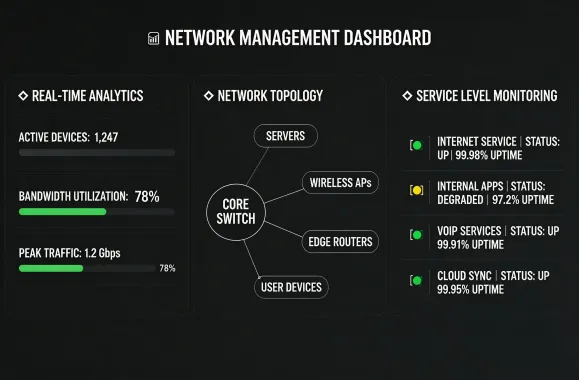
Mist AI applies machine learning, data science, and natural language processing to network operations. The Marvis Virtual Network Assistant provides conversational troubleshooting, anomaly detection, and root cause identification—reducing mean time to resolution by up to 90%.
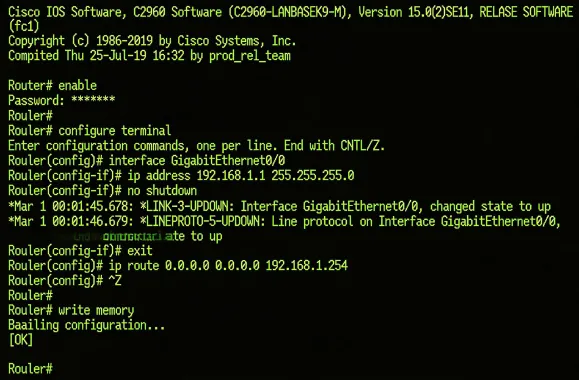
A single, consistent operating system across switching, routing, and security platforms. Junos OS provides modular process architecture with in-service software upgrades, unified configuration management, and a programmable automation framework.
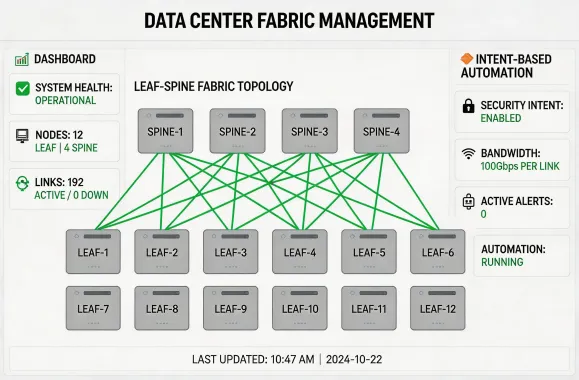
Apstra abstracts network complexity into intent—you define what you want, and Apstra handles how to implement it across multi-vendor fabrics. Continuous validation compares actual network state against intended state, flagging discrepancies before they cause outages.
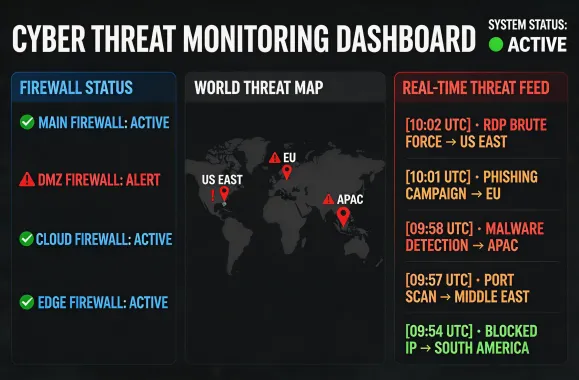
Juniper’s Connected Security strategy unifies threat intelligence across routers, switches, firewalls, and cloud workloads. SecIntel delivers curated threat feeds to every enforcement point, while Advanced Threat Prevention provides sandboxing and encrypted traffic analysis.
Network architecture decisions involve genuine engineering trade-offs. We present both perspectives to help you make informed choices.
A core decision in modern network design is whether to standardize on a single vendor’s integrated stack or adopt open networking standards like OpenConfig and SONiC.
Unified management plane with a single support contact, proven interoperability between components, and typically faster initial deployment. Gartner’s 2024 Network Infrastructure report notes that 62% of enterprises still prefer single-vendor core networks for operational simplicity.
Avoids vendor lock-in, enables best-of-breed component selection, and can reduce hardware costs by 20–40% through white-box switches (Dell’Oro Group, 2023). Community-driven innovation through projects like SONiC and OpenConfig accelerates feature delivery.
Juniper supports both models—Apstra manages multi-vendor fabrics including Cisco, Arista, and SONiC-based switches alongside native Juniper hardware, giving customers flexibility to adopt disaggregation incrementally.
Carriers deploying 5G infrastructure face a fundamental spectrum allocation trade-off that impacts coverage, capacity, and infrastructure investment.
Delivers massive bandwidth—up to 800 MHz channel widths and multi-Gbps throughput—ideal for dense urban venues, industrial IoT, and fixed wireless access. However, signals attenuate rapidly beyond 200–300 meters and require line-of-sight, necessitating 10–20x more cell sites than sub-6 GHz.
Superior building penetration and coverage radius of 1–3 km per cell site, making it more cost-effective for nationwide rollout. Mid-band (3.5 GHz) offers a balanced compromise with 100–400 MHz channels, though peak throughput remains below mmWave capabilities.
Most operators adopt a layered strategy: sub-6 GHz for broad coverage and mmWave for capacity hotspots. Juniper’s routing platforms support both backhaul architectures with traffic engineering optimized for each deployment model.
| Standard / Certification | Scope | Applicable Products |
|---|---|---|
| FCC Part 15 / Part 68 | North America regulatory | All products |
| CE RED (2014/53/EU) | EU market access | All products |
| NEBS Level 3 (GR-63/GR-1089) | Carrier-grade equipment | MX Series, EX Series |
| FIPS 140-2 Level 2 | Cryptographic validation | SRX, MX, EX platforms |
| ISO 9001:2015 | Quality management | All manufacturing facilities |
| UL Listed | Product safety | Network equipment, infrastructure |
| RoHS / REACH | Environmental compliance | All products |
Transparent engineering means disclosing where our solutions perform optimally and where alternative approaches may be more appropriate.
Standard Juniper hardware is rated for −5°C to +50°C ambient temperature. Deployments in extreme environments (offshore platforms, desert cell sites, arctic regions) require extended-temperature variants rated −40°C to +70°C, which are available for select MX and ACX platforms but not across the full product line.
Mist AI accuracy depends on the volume and diversity of telemetry data ingested. New deployments typically require 2–4 weeks of baseline data collection before anomaly detection reaches full effectiveness. Networks with fewer than 50 access points may see reduced AI model precision compared to large-campus deployments.
Apstra multi-vendor support covers specific validated hardware models and NOS versions. Not all third-party switch platforms are supported—current validated vendors include Cisco NX-OS, Arista EOS, and SONiC-based switches. Custom ASIC features specific to non-Juniper platforms may not be configurable through Apstra’s intent model.
Access white papers, solution briefs, and reference architectures from our engineering team.
Request Documentation Access